Prices Hid the Empty Sea
Depletion, scarcity prices and the end of American whaling, 1784–1920
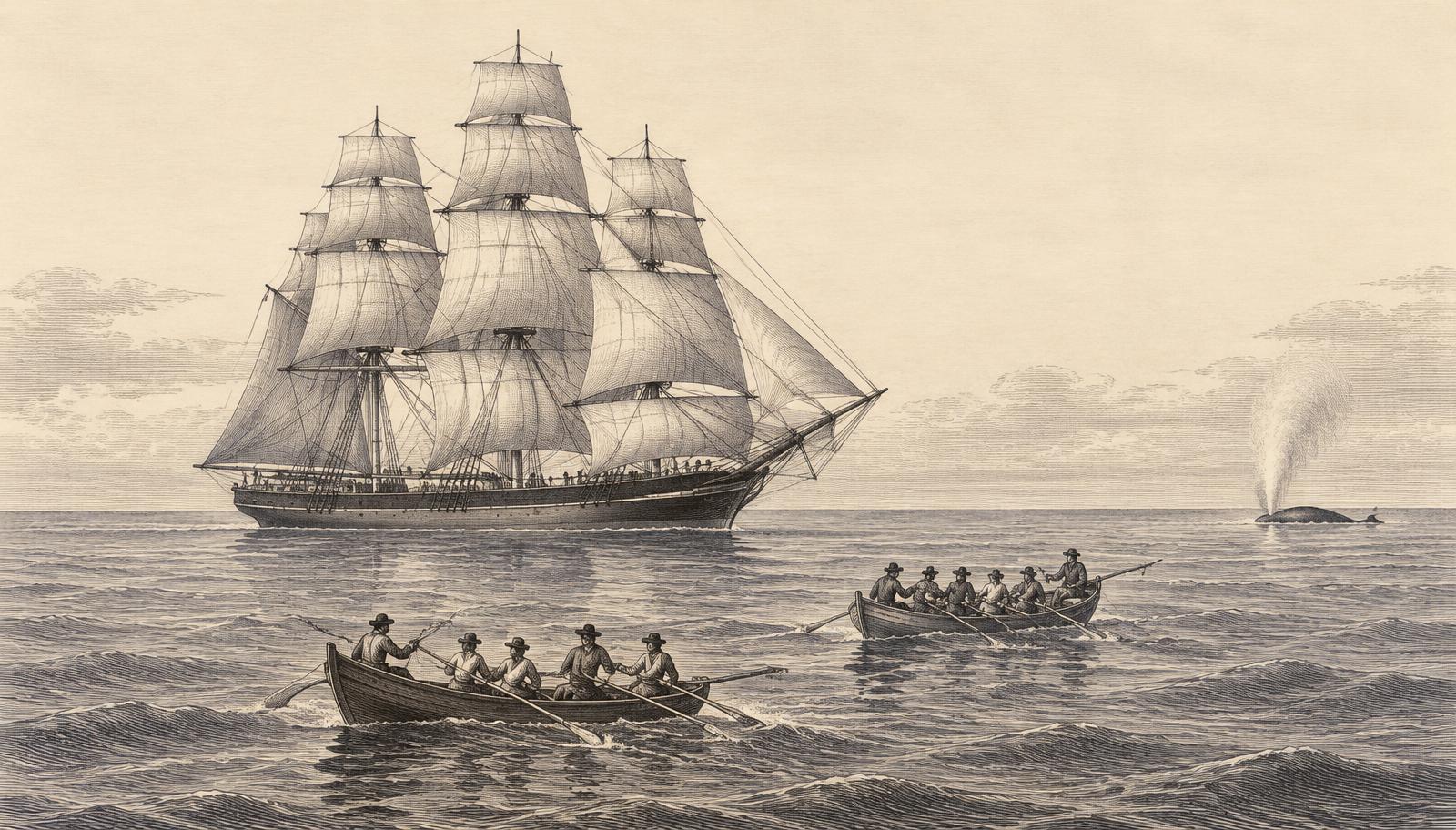
Every day at sea, whaling crews wrote down where they were and whether they saw or struck a whale. Nearly half a million of those entries survive. Plotted together, they show the fleet pushing from the Atlantic into the Pacific and up to the Arctic, meeting fewer whales in each ocean it worked. Yet the industry's accounts looked healthy: as the catch thinned, whalebone grew so dear that a smaller cargo paid as well as a large one had before. The hunt went on until something from outside the sea ended it.
Throughout, recording coverage, effort proxies and reported returns are kept strictly apart. Nothing here measures how many whales there were.
Voyage atlas
Animated logbook tracks filtered by decade, species, rig and source.
Effort & encounters
Coverage, heuristic search-days and reported encounters on 1° and 5° grids; return-versus-range.
Species
Composition by decade and basin, seasonal timing, species distribution.
Frontier
The logged fleet year by year on 0.1° cells, basin effort shares and lagged redeployment.
Case studies
Acushnet, Charles W. Morgan and Fortune, read day by day from their logs.
Data quality
Source eligibility, gaps, missingness and linkage diagnostics.
Methods & checks
Formal definitions, validation checks, known biases and citations.
The economic argument
Basins emptied in turn, scarcity prices paid for the thinner catch, and shocks from outside ended the hunt.